
Jackson Signs Blog
Make Your Summer Outdoor Event a Success With These Tips
 Summer is a great time to hold an outdoor event. We can take part in festivals, fundraisers and community celebrations that all attract strong attendance when the weather is warm.
Events also require careful planning; heat, rain, wind and limited access to power can quickly create problems. Guests also need to find entrances, activities, washrooms and other important areas without asking for directions.
A successful event accounts for these details and much more before the first visitor arrives through the gates.
Let’s get started
Plan for the Comfort and Needs of Your Event Guests
People are more likely to stay when an event is comfortable, organized and easy to navigate.
Whether you expect 50 or several hundred guests, the following areas should be included in your planning.
Choose a Suitable Location
The location needs enough room for the activities you have planned, but available space is only one consideration.
Examine how guests will enter and leave, where vendors will unload and whether emergency vehicles can easily access the property.
Walk through the location as if you were attending the event for the first time. Check the condition of the ground, available shade and the distance between the parking and the event area.
Look for problems like uneven ground, narrow pathways and long walks which can all create difficulties for older adults, parents with children and people with mobility limitations.
Confirm whether the property provides access to:
- public or portable washrooms
- accessible parking spaces and pathways
- electrical outlets
- garbage and recycling collection
- running water
- sheltered areas
- emergency vehicle routes
Have Enough Drinking Water Available
Water is one supply that should never run out during a summer event. Estimate how much you will need based on expected attendance, the temperature, the length of the event and the amount of physical activity that will take place. Remember that staff and volunteers also need water throughout the day.
Set up more than one water station if the site is large. Strategically place them where they can be easily seen and reached without creating long lines. Keep reserve cases of water in a cool storage area and assign someone to check the supply regularly.
Health Canada advises people to drink water before they feel thirsty and to drink before, during and after physical activity.
Its guide on protecting yourself during extreme heat also recommends taking breaks and avoiding unnecessary sun exposure so be sure to encourage people to drink as much water as possible depending on the forecasted heat for that day.
These are recommendations that will help the organizers plan for water, shade and rest areas for a potentially hot day.
Provide Shade and Shelter
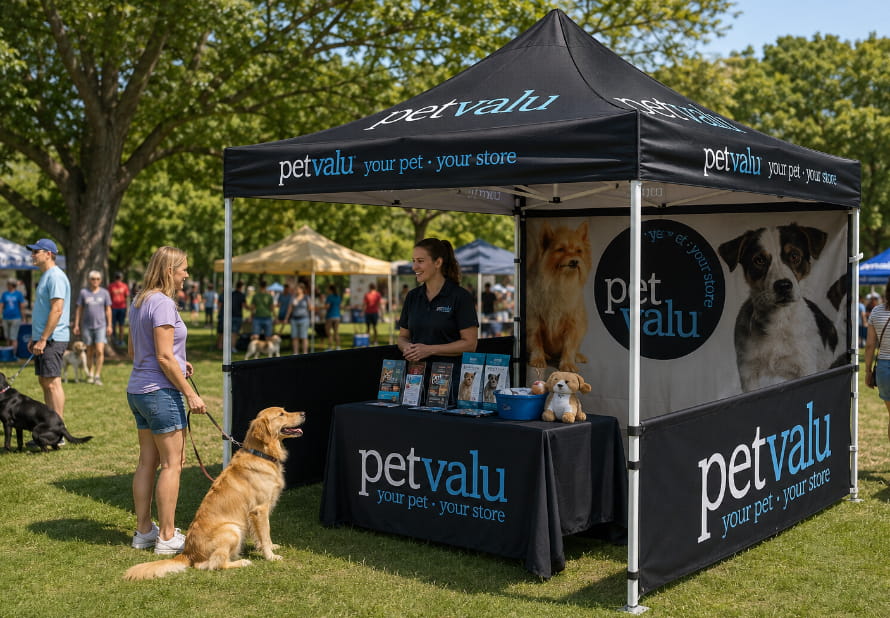
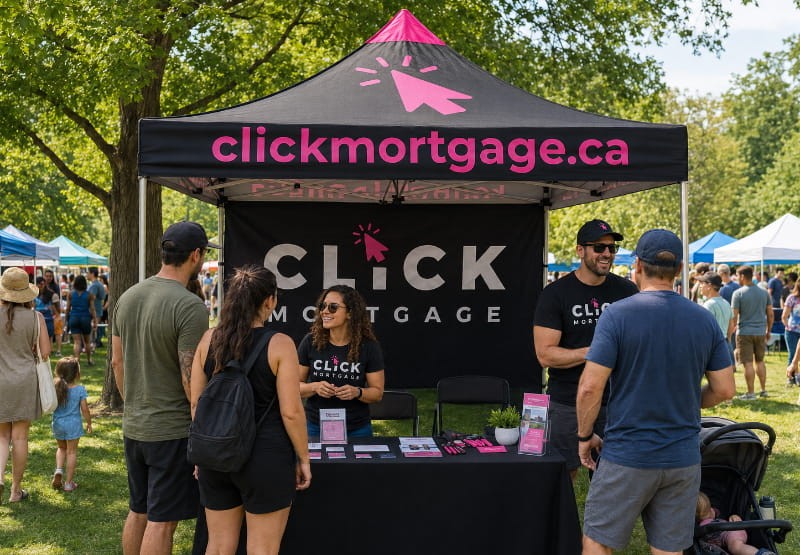 Guests need places where they can get out of direct sunlight. Natural shade from mature trees can help, but it may not cover registration areas, vendors, food stations or seating.
Tents and canopies provide shade while also defining different areas of the event. Organizers and participating businesses can use Promotional Canopy Tents to make their locations easier to identify while providing shelter for staff, supplies and visitors.
All temporary shelters must be properly secured. Follow the manufacturer’s anchoring instructions and find out whether the venue has rules concerning stakes, weights or temporary structures. A canopy should not remain open when winds exceed its rated limits.
Prepare for Changing Weather
A sunny morning does not guarantee a dry afternoon. Start checking the forecast several days before the event and continue monitoring it while the event is underway. Pay attention to temperature, humidex, wind, thunderstorms and air-quality warnings.
Create a weather plan that answers the following questions:
- What conditions would delay or cancel the event?
- Who has the authority to make that decision?
- Where will guests go if severe weather develops?
- How will staff and vendors receive updates?
- How will changes be announced to attendees?
- Which equipment must be taken down first?
Share the plan with staff and vendors before the event. If bad weather arrives, everyone should know what to do without waiting for instructions.
Make the Event Easy to Navigate
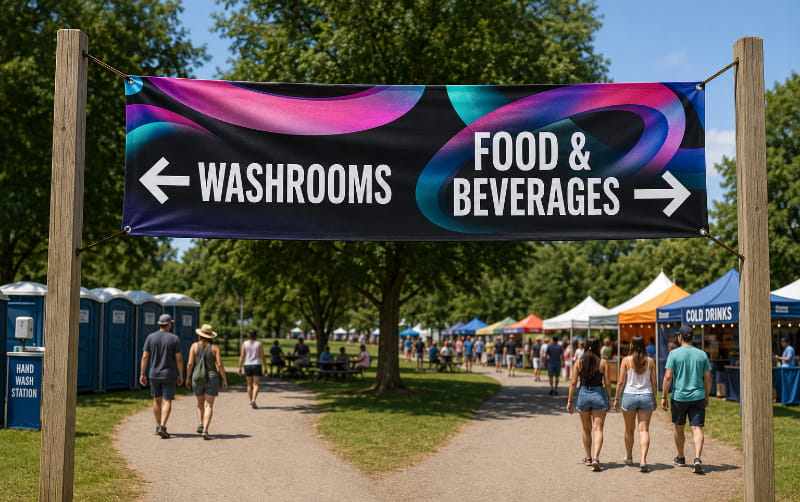 Clear directions help guests move around the site and reduce repeated questions for staff. Place signs and banners at the parking and pedestrian entrances and any location where visitors have to choose between different paths.
Useful event signs may identify:
- registration and ticket areas
- parking and accessible parking
- washrooms and handwashing stations
- food and beverage areas
- first aid areas
- scheduled activities
- exits and emergency meeting areas
Use large lettering, short messages and colours that are easy to distinguish. Signs should be placed high enough to remain visible when the event becomes crowded. Check the full route from the parking area to the main activities rather than concentrating all signage near the entrance.
Keep Registration and Information Areas Organized
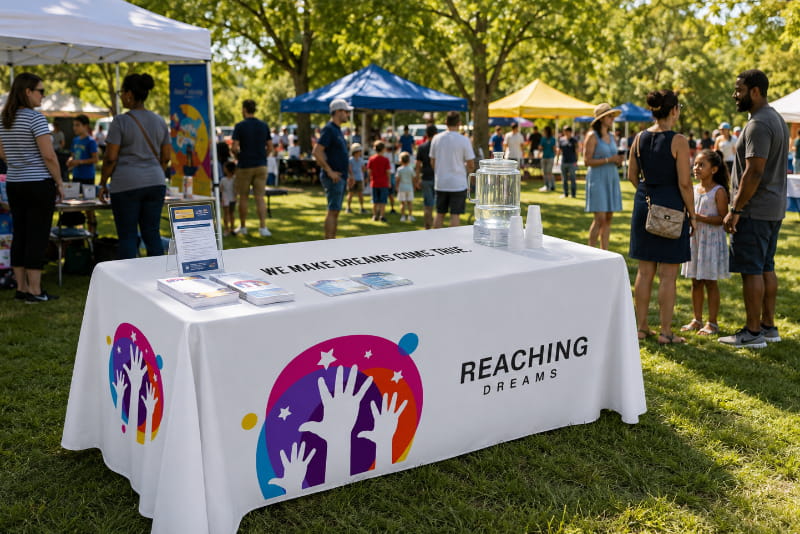 The welcome area shapes a guest’s first impression of the event so the registration should be easy to find. It should also be adequately staffed and supplied with everything needed to quickly process visitors.
Separate advance registration from walk-in registration when attendance is high. Prepare name lists, wristbands, maps, schedules, pens, payment equipment and information packages before opening. Keep extra supplies in labelled containers under or behind the table.
A plain folding table can look unfinished and may leave boxes, supplies and personal belongings exposed. You can use fitted Promotional Table Covers to create a cleaner appearance while clearly identifying registration tables, information booths, vendor displays and other important areas throughout the event.
Plan Food Service Carefully
Food and drinks are usually a major part of an outdoor event so vendors need to be prepared for enough space to serve customers without blocking walkways or creating obstructions to traffic and activity areas.
You can read our Vendor Readiness Guidelines for Outdoor Events (pdf) for initial questions to confirm before food and beverage vendors arrive.
Confirm access to electricity, water, waste disposal and refrigeration are reliable and fully available before vendors arrive. Ask each of them what equipment they’re bringing and how much space they’ll need. Be prepared for things like electrical cables which should be covered or food trucks that need enough room to enter, park and leave safely.
Provide options for common dietary requirements and label them clearly. Guests should be able to identify vegetarian, vegan, gluten-free and allergy-aware choices without holding up the line. Food safety requirements and any necessary permits should be confirmed with the appropriate local authorities.
Recruit Enough Staff and Volunteers
A good event plan still needs enough people to carry it out so be sure to sssign each staff member or volunteer a specific role and give them a schedule, contact list and site map.
Some important responsibilities may include:
- welcoming and registering guests
- directing parking and pedestrian traffic
- monitoring water and other supplies
- supporting vendors and performers
- checking washrooms and waste stations
- watching for weather changes
- responding to first-aid or safety concerns
Make sure to schedule breaks and provide a shaded areas for the staff because volunteers who become hot, tired or dehydrated will have difficulty helping guests effectively.
Promote the Event Before It Happens
Even a well-organized event needs enough people to know about it to people actually come to it.
Start promotion early and provide enough information that visitors need to decide whether to attend.
Include the date, opening and closing times, address, admission cost, RSVPs and parking details in every major announcement whether it’s online or through flyers.
If needed mention whether guests should bring chairs, sunscreen, refillable water bottles or rain gear. If the event is suitable for children or pets, explain any related rules.
Use several ways to reach the local audience including:
- the organization’s website
- social media posts and event listings
- email newsletters
- community calendars
- posters and lawn signs
- local business partnerships
- updates from participating vendors
Test the Setup Before Guests Arrive
Complete the main setup early and then test it out. Check sound equipment, payment terminals, lights, extension cords and everything else that involves planning, under the same conditions in which they’ll be used.
Do a walk through of the entire site once the tents, tables and signs are in place. Look for blocked signs, tripping hazards, unstable equipment and narrow areas where crowds could form. Make sure staff know where first-aid supplies, fire extinguishers and emergency contacts are all located.
These final inspections usually catch a lot of small problems that can be fixed before launch and would be much harder to correct after the gates are open.
Give People a Summer Event They Will Want to Attend Again
Once these requirements are covered, the entertainment, food and atmosphere can receive the attention they deserve. Visitors may never know how much planning took place behind the scenes, but they will notice when the event feels comfortable, well organized and a great success.